
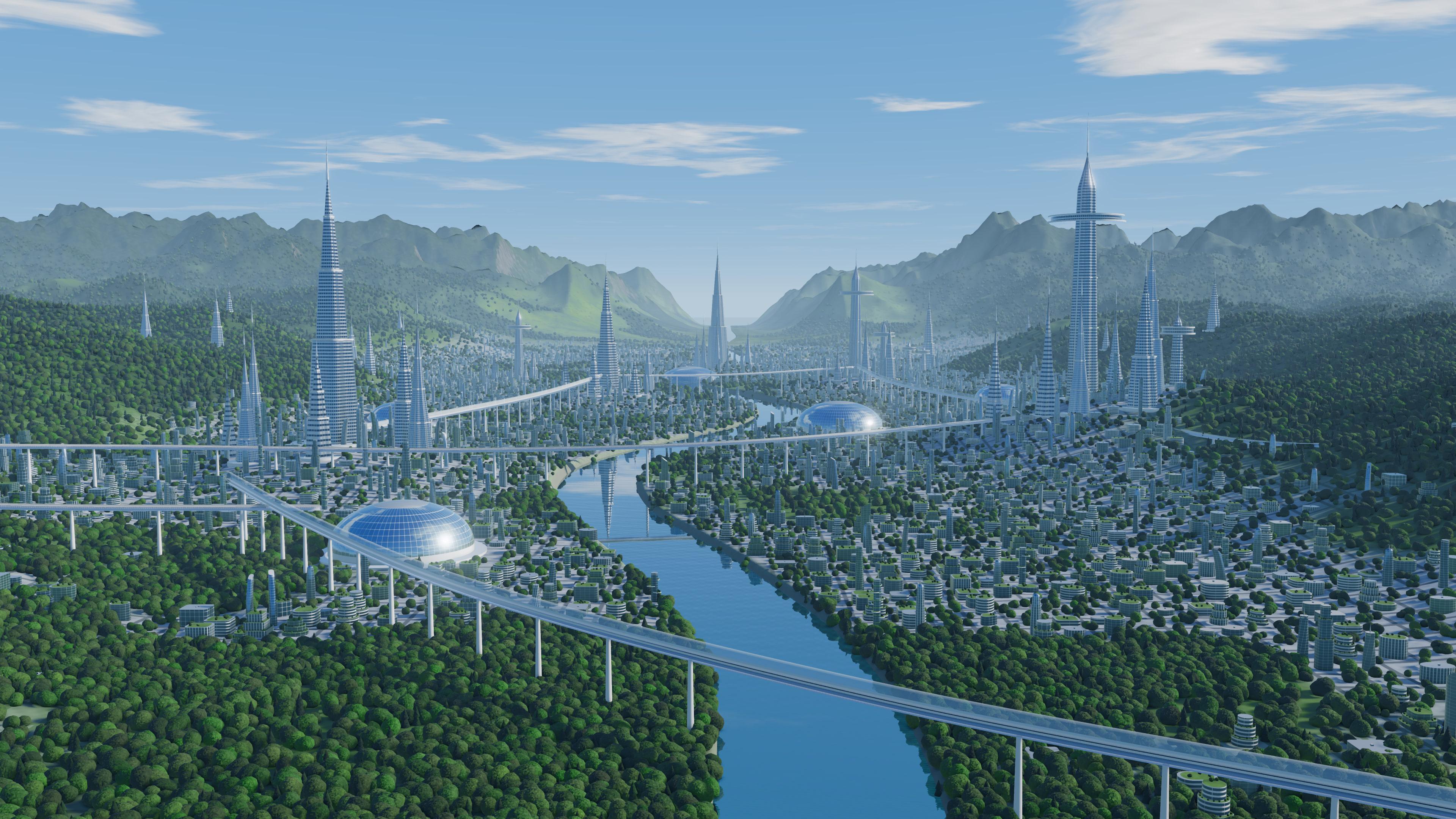
For those who build what comes next.
AeroTerra gives visionaries a new way to imagine, design, and evolve the cities that will shape the future.
Concept preview · not product output
The future is moving faster than the systems built to create it.
We have allowed outdated systems to turn progress into a waiting room. We can model complex systems, develop extraordinary technologies, and connect ideas across the world instantly—yet we still struggle to build the housing, infrastructure, energy, and resilient communities the future requires.
This is not a failure of imagination. It is a failure of civilization’s ability to act.
AeroTerra exists because patching systems built for another era is not enough. We need new tools to imagine, plan, and build what comes next.
AI should expand human capability.
01 Human intent
02 AI proposals
03 Structured city
04 Human choice
Concept diagram
The purpose of AI is not to make people irrelevant. Its purpose is to give people greater reach: to turn a complex idea into something visible, testable, and continuously improvable.
AeroTerra is being built to help visionaries move from possibility to structure—to explore cities, infrastructure, and new ways of living that would otherwise remain trapped in imagination.
The machine can accelerate the work. People still decide what is worth building.
From language to a living city.
Describe an idea in your own words: a resilient coastal city, a new district, a different transportation system, a place built around a new way of living.
AeroTerra is being built to translate that intent into a structured, explorable city—grounded in real geography, shaped by systems, and designed to change as the idea evolves.
The aim is not a static image of the future. It is a living model: one you will be able to explore, question, revise, and build upon.
“Design a resilient coastal city for 300,000 people with waterfront districts, artificial islands, and a dense transit network.”
Concept diagram · planned flow, not a product screenshot
One city. Many connected systems.
Concept diagram · connected city objects, not live telemetry or simulation
Cities should create more freedom.
A city should not consume its people’s time, options, and energy just to keep them functioning. It should expand their ability to move, learn, create, connect, and choose how to live.
More time. More mobility. More choice. More room to create.
When automation removes repetitive complexity, its value should become more time for people—not less agency. When infrastructure improves, it should create access and mobility—not new barriers.
AeroTerra imagines cities as foundations for a freer, more capable human life.

Build stronger here. Go farther from here.
Humanity’s future is not confined to one planet. But a civilization capable of reaching farther must first become better at building, sustaining, and renewing life on Earth.
The cities we create now are not separate from that future. They are its foundation: places where new technologies, new institutions, and new forms of human possibility can take root.
AeroTerra begins with the world we have—so humanity can be ready for the worlds beyond it.
The next chapter begins when we decide to build it.
The future will not be delivered to us. It will be imagined, tested, designed, and built by people willing to move beyond what already exists.
AeroTerra is for the visionaries building what comes next.
Version 1.0 Public Early Access is the first practical step towards it, targeted for November 1, 2026. It is a small part of this ambition, and it is the part being built now.